The new song is not mostly sung in church.
It is sung in kitchens. In bedrooms before dawn. In hospital corridors. In cars stopped at the side of a road. In small ordinary moments when nobody is watching and the body is doing, by sheer grace, what it has decided to keep doing.
The song the Bible has been asking for is not a piece of music you perform on a stage. It is the rhythm of a life that has decided to keep going, sung by the body, mostly without words and mostly without an audience, in the long quiet weather of a season that has not yet lifted.
If you have been waiting to feel something before you sing, you may not have noticed that the singing already started.
It looks like getting out of bed when you did not want to.
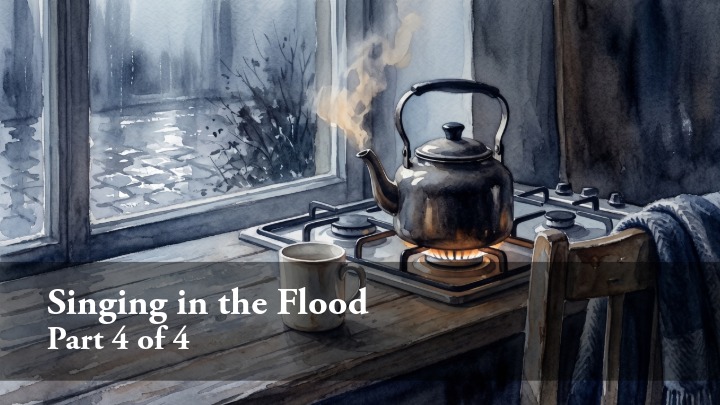
It looks like putting the kettle on, pouring the cup, drinking the tea. Caring for the body that has been carrying you, even when the body has lately been hard to care for. The boiling water is the first note and the cradling of warmth in your hands is somehow the chorus.
Opening the curtain. Letting the grey light in. Standing at the window a moment, watching the rain or the slow brightening of the sky. You do not have to feel anything. The looking is the song.
The first text of the day to one trusted person. Today is hard. Three words, no paragraph, no explanation. You sent them, and the sending was a refusal to disappear into your own room.
Taking the medication is the small daily admission that you cannot do this alone today, that you need chemical help and the help of people who have spent careers studying brains. The pill in your hand is part of the orchestra.
Saying "Lord, have mercy" is the whole prayer. You do not need more words, and you do not need to feel them. Say them slowly, three times, and stop. That is the new song in the smallest possible voice, in the smallest possible room.
Then getting through the morning, and the afternoon, and the evening. Each unit of time crossed not by triumph but by the slow deliberate decision to remain in the room of your own life.
The new song is not a performance. It is a body that has decided to keep being a body for one more day.
Look closely at the hardest seasons of the Bible's most heroic figures and you find they produced no heroic music. They produced something quieter.
Elijah, under the broom bush, slept. Then the angel fed him. "Get up and eat, for the journey is too much for you" (1 Kings 19:7). No sermon, just bread. The song Elijah sang in that hour was eating the bread, and sleeping again, and letting his body recover what the crisis had taken.
Job, in his deepest grief, sat. "Then they sat on the ground with him for seven days and seven nights. No one said a word to him, because they saw how great his suffering was" (Job 2:13). His song for those seven days was the song of sitting, of not running from his own pain, of continuing to be a body in a place while the loss did what loss does.
And on the Saturday between the cross and the resurrection, the disciples produced not one line that has come down to us. The Gospels record nothing at all of that day. Their song was the song of getting through it.
The body that eats. The body that sits. The body that takes the next breath and does, by some grace beyond its own resources, the small ordinary thing it can still manage today.
You have been singing the whole time.
You did not know it. You thought the silence in your interior was the absence of worship. Continuing to be in the world, day after day, when continuing has cost you more than anyone around you has known, has been the new song. It is the music the Lord has been listening for. He has not been waiting for you to feel something. He has been hearing the small steady rhythm of a believer who decided, on no particular Tuesday, to keep going.
The kettle has been the song. The walk around the block has been the song. The choice not to numb, and to call the counsellor, and to open the Bible to one psalm and read three verses, and to close it again without feeling guilty. The choice to be honest in prayer even when honest meant I am angry, or I cannot feel you, or I do not know how to do this anymore.
The water may still be high tomorrow. The flood in your particular life may not lift for a long time. The song does not require the water to lower. It is what gets sung in the water, and Christians have been singing it in every century and every kind of trouble, and the Lord has been the one collecting it.
He has been collecting yours. The song you did not know you were singing has been heard and received and added to the long song of the saints.
Take the next breath. That is the next note.
Part 1: The Impossible Command
Part 2: A Different kind of Music
Part 3: When the Sea joins the Choir
Part 4: The Body that keeps Singing